
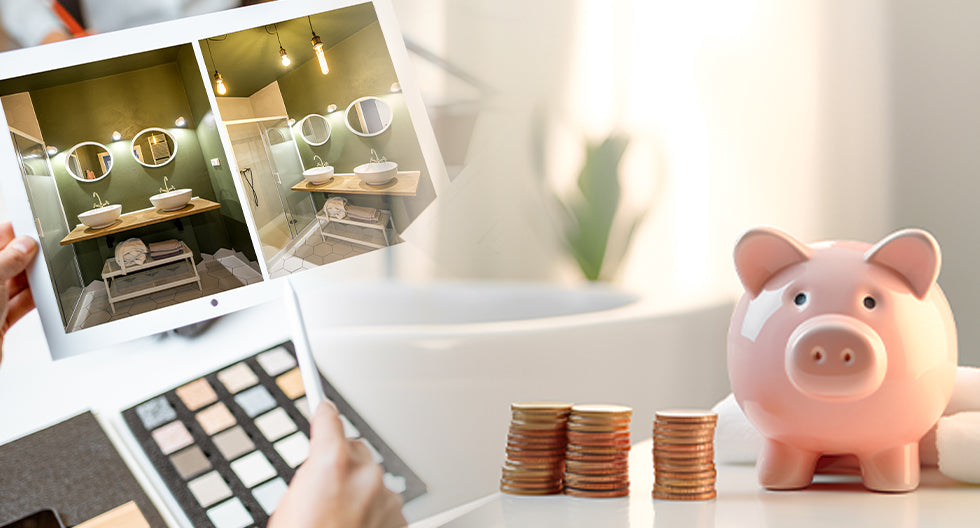
Most budget bathroom renovations run over because money is spent early on things that add little visual or functional value. How to renovate a bathroom on a budget is less about finding cheap products and more about making controlled decisions.
This guide explains where to spend, where to save, and how to plan using a realistic bathroom renovation budget breakdown, so the finished space looks intentional rather than cut back.
Key Takeaways
- Keep the existing layout to avoid plumbing costs
- Focus spending on surfaces and fixtures you see and use daily
- Reduce tiling and labour rather than chasing cheaper materials
- Plan the full budget before buying anything
What is a Realistic Budget for a Bathroom Renovation?
For most UK homes, budget bathroom renovations land between £4,500 to £7,000 according to Checkatrade. You can hit the lower end by keeping the layout, choosing off-the-shelf fittings, and doing some work yourself.
Bathroom Renovation Budget Breakdown
- Fixtures and fittings: £700–£1,500
- Tiling or wall panels: £300–£1,500
- Flooring: £150–£1000
- Labour (partial DIY): £500–£1,500
- Buffer: 10-15%
This bathroom renovation budget breakdown keeps you honest. If one line grows, cut another.
Budget Bathroom Renovations Without Plumbing
If there is one rule that matters more than any other, it is keeping plumbing where it is. Moving waste pipes, water feeds, or drains increases labour time and introduces risk, particularly in older homes.
Instead, choose fixtures that align with existing positions. Modern toilets, vanity units, and showers are designed to suit standard layouts, making replacements straightforward. Even small shifts can trigger additional costs once walls or floors are opened.
Work with what you have:
- Replace taps and shower heads instead of pipework.
- Swap vanity units that fit existing waste points.
- Update radiators with like-for-like sizes.
- This single choice can save thousands.
Bathroom Renovation Ideas
The most effective bathroom renovation ideas on a budget target what the eye notices first. Bathrooms are compact spaces, so surface changes have a disproportionate impact. Small changes can lift the room if you pick the right spots.
Refresh, Don’t Replace
- Regrout tiles or use a grout pen for instant lift.
- Paint tiles with specialist tile paint.
- Wrap old cabinets or change doors only.
Upgrade Visible Details
- New mirrors with LED edges.
- Modern handles and towel rails.
- A frameless shower screen.
These bathroom renovation ideas on a budget focus spend where your eye goes.
How to Save on Tiles and Walls
Tiles look great but drive costs, largely due to labour. Reducing how much tile is installed is usually more effective than choosing the cheapest tile available.
Tile Less, Design More
- Tile only wet zones. Paint the rest.
- Use large format tiles to cut labour time.
- Consider wall panels in showers to avoid grout lines.
- Panels install faster and cost less overall.
Flooring Options to Suit Your Budget
Bathroom flooring must handle moisture without adding unnecessary cost. Vinyl remains the most practical choice for budget-focused projects. You need water resistance and value.
Smart floor choices
- Luxury vinyl tile or plank. Warm underfoot. Easy fit.
- Sheet vinyl for tight budgets.
- Porcelain only if you self-install or find clearance.
- Avoid natural stone. It costs more to buy and fit.
Choosing the right flooring avoids spending heavily in an area that does not define the room visually.
How to Choose Fixtures Without Overspending
Fixtures vary widely in price, but higher cost does not always mean better performance. Setting spending limits early helps avoid impulse upgrades later.
Simple, widely available finishes such as chrome or brushed steel are affordable, easy to replace, and age better than trend-led options. Mid-range fixtures often provide the same reliability as premium brands without paying for design features that add little functional value.
Spend Caps That Can Work
- Toilet: £150–£300
- Basin and vanity: £200–£500
- Taps and shower: £150–£400
Prioritise fixtures you use daily, such as taps and showers, over statement pieces that absorb budget without improving usability.
DIY vs Trades: Where to Draw the Line?
DIY can reduce costs, but only when applied carefully. Painting, preparation, flat-pack bathroom furniture, and accessory installation are often suitable for confident homeowners.
Plumbing, electrics, and waterproofing should always be handled by licensed professionals. Errors in these areas can lead to leaks, safety issues, and costly repairs later.
How to Avoid Going Over Your Renovation Budget
Cost overruns usually come from late changes rather than poor pricing. Once work begins, even small adjustments add time and expense. A simple checklist beats guesswork.
Keep control
- Finalise the design, fixtures, and finishes before ordering materials.
- Buy everything upfront to avoid delays
- Keep a 10%-15%, just as a buffer
Start Planning Your Bathroom Renovation Today
Successful budget bathroom renovations are less about cutting costs and more about controlling decisions. By keeping the layout, choosing upgrades that change what you see and use, and following a clear bathroom renovation budget breakdown, you can achieve a modern, functional bathroom without overspending.
Started planning already? Find your style between classic vs modern bathrooms. Or get in touch with our expert team to discuss your bathroom renovation.
Frequently Asked Questions
How much does a budget bathroom renovation cost in the UK?
Most budget bathroom renovations cost £4,500–£7,000. Keeping the layout and doing some DIY pushes costs down.
How long does a budget renovation take?
Most projects take one to two weeks, assuming materials are ready and no major issues are uncovered.
What gives the best value upgrade?
Lighting, mirrors, and refreshed wall finishes usually deliver the greatest visual improvement for the lowest spend.
Can I renovate a bathroom on a budget in a rental?
Yes. Focus on reversible updates like paint, accessories, and peel-and-stick options with landlord approval.
Is it worth keeping old tiles?
Often yes, if it keeps you within your budget. Clean, regrout, or paint. Replace your tiles only if damaged or dated beyond saving.